Phygital is the Default: Designing Hybrid Retail Experiences
Designing Hybrid Retail Experiences

Phygital is the Default
Designing Hybrid Retail Experiences
A detailed analysis by Monadex
Executive Summary
Retail is entering a phase where the distinction between physical and digital experiences is no longer meaningful. Customers increasingly engage with both simultaneously, using mobile devices, in-store interfaces, and digital platforms as part of a single continuous journey.
This shift has led to the emergence of “phygital” experiences, where physical environments are enhanced with digital capabilities and digital interactions are grounded in physical context. While many organizations recognize this trend, execution remains inconsistent.
The challenge is not simply adding digital elements to physical stores, but designing integrated systems that reduce friction, increase engagement, and align with real customer behavior. This paper examines the evolution of hybrid experiences, the role of technology in enabling them, and the implications for retail design and strategy.
1. The End of Channel Thinking
Retail has historically been structured around channels: physical stores, e-commerce platforms, and mobile applications. Each channel was optimized independently, with distinct teams, technologies, and performance metrics.
However, customer behavior has fundamentally changed. Shoppers no longer move through a linear journey. Instead, they interact across multiple touchpoints simultaneously. A customer may browse products online, check reviews on a mobile device while in-store, and complete a purchase through a different channel entirely.
This behavior renders traditional channel-based models insufficient. From the customer’s perspective, there is only one experience. The concept of “phygital” emerges from this reality, representing the convergence of physical and digital interactions into a unified journey.
Separate Channels
Phygital Experience
2. Mobile as the Bridge
Mobile devices have become the primary interface connecting digital and physical environments. In-store behavior increasingly reflects this, with customers relying on their smartphones for price comparison, product research, and decision validation while physically present in retail spaces.
Mobile is not simply another channel. It functions as a real-time layer that augments physical experiences. It enables customers to access information, interact with brands, and navigate environments without leaving the store.
This creates new expectations. Customers expect seamless transitions between physical and digital touchpoints, with consistent information, pricing, and experiences. Any friction between these environments becomes immediately visible.
For retailers, this means designing experiences that assume mobile interaction as a default behavior, not an exception.
3. In-Store Digital Behavior
The role of the physical store is evolving as customer behavior changes. Stores are no longer isolated environments focused solely on transactions. Instead, they are becoming interactive spaces where digital behaviors are embedded into the shopping process.
Common in-store behaviors now include:
Comparing prices across platforms while standing in front of products
Reading reviews and watching product demonstrations in real time
Scanning products for additional information or promotions
Sharing content and experiences through social platforms
3. In-Store Digital Behavior (cont.)
These behaviors indicate that the store is no longer a closed system. It is part of a broader digital ecosystem where information flows continuously between environments.
Retailers that fail to accommodate these behaviors risk creating disjointed experiences, where customers rely on external platforms instead of retailer-controlled systems.
4. From Transactions to Experiences
One of the most significant shifts in retail is the changing role of the physical store. Traditionally, stores were designed to facilitate transactions: display products, provide information, and enable purchase.
Today, much of this functionality has shifted to digital platforms. Product discovery, comparison, and even purchasing can be completed online more efficiently than in-store.
As a result, the value of physical retail must evolve. Stores are increasingly designed to provide experiences that cannot be replicated digitally:
Traditional Store
Experiential Store
Interactive product exploration
Immersive brand environments
Social and shareable moments
Personalized engagement
5. Interactive Experiences as a Core Capability
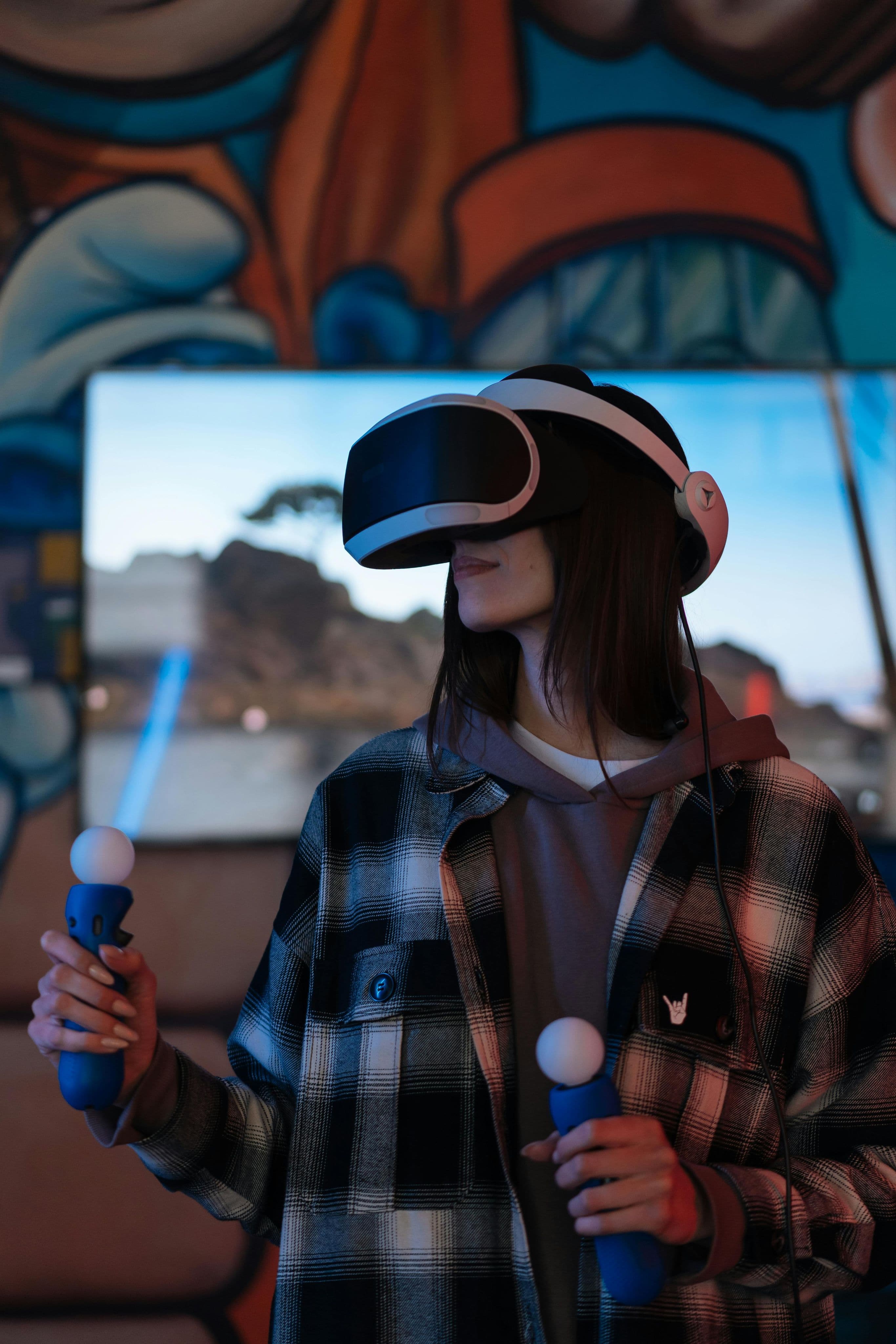
Interactive experiences play a critical role in bridging physical and digital environments. These experiences allow customers to engage with products and brands in ways that are both informative and immersive.
Examples include:
Interactive kiosks that provide product information and recommendations
Augmented reality (AR) applications that visualize products in context
Digital displays that respond to user input
Guided demos that simulate product usage
5. Interactive Experiences (cont.)
These experiences serve multiple functions. They enhance customer understanding, reduce uncertainty, and create memorable interactions that drive engagement.
Importantly, they also allow retailers to capture data on customer behavior within physical environments, providing insights that were previously limited to digital channels.
6. Product Experience in the Buying Journey
The buying process is becoming increasingly complex, with customers expecting to understand product value quickly and independently. Traditional methods, such as live demonstrations or sales interactions, are often insufficient to meet this demand at scale.
Interactive product experiences address this gap by allowing customers to explore products at their own pace. The key is alignment with the buyer journey:
Early stages, benefit from exploratory and educational interactions
Mid stages, require deeper engagement and validation
Late stages, focus on reducing friction and enabling conversion
7. Stores as Media and Engagement Platforms
As experiences become central to retail, the role of the store is expanding. Stores are increasingly functioning as media platforms, where brands can engage customers through content, interactions, and environments.
In this model, the store is not only a place to sell products but also a platform for storytelling, engagement, and data generation.
The Store as a Platform
Content
Interaction
Data
Storytelling
Social
Revenue
7. Stores as Media Platforms (cont.)
This redefinition has significant implications for store design, investment priorities, and performance measurement. Success is no longer defined solely by sales per square foot, but by metrics related to engagement, interaction, and long-term customer value.
8. Designing Phygital Experiences
Designing effective phygital experiences requires a shift in approach. Rather than layering digital elements onto physical environments, retailers must design integrated experiences from the ground up.
Key principles include:
8.1 Start with Customer Behavior
Identify how customers already move between physical and digital environments, and design experiences that align with these patterns.
8.2 Reduce Friction
Ensure that transitions between touchpoints are seamless, with consistent information and minimal barriers.
8.3 Integrate, Don’t Add
Digital elements should be embedded into the experience, not treated as separate features.
8.4 Enable Interaction
Design for active engagement rather than passive consumption.
8.5 Capture and Utilize Data
Use interactions to generate insights that inform continuous improvement.
9. Implications for Retail Strategy
The shift toward phygital experiences has several strategic implications:
Experience becomes a primary differentiator, As products become commoditized, the quality of the experience becomes a key driver of customer preference.
Technology must support real-world interaction, Systems must be designed to function reliably in physical environments, where constraints differ from digital platforms.
Measurement frameworks must evolve, Traditional metrics must be complemented by measures of engagement, interaction, and experience quality.
Organizational alignment is critical, Delivering phygital experiences requires coordination across digital, physical, and operational teams.
10. Conclusion
Phygital is no longer an emerging concept. It is the default state of modern retail. Customers expect seamless integration between physical and digital environments, and retailers must design experiences that reflect this reality.
The shift from transactional to experiential retail redefines the role of the store, transforming it into a space for engagement, interaction, and value creation beyond the point of sale.
Organizations that succeed in this environment will be those that move beyond channel-based thinking and design cohesive, integrated experiences that align with how customers actually behave.
Cover, Page 1 of 15

Let's Chat
Partner with Monadex to build your next experiential project.